


How a Welded Dana 60 Differential Works
If you’re building an off-road rig on a budget, chances are you’ve looked at locker prices and immediately started reconsidering your life choices. Mechanical lockers, air lockers, and spools for a Ford Super Duty Dana 60 can easily cost anywhere from $500 to over $3,000 depending on the setup.
For this build, I decided to go the cheap and simple route instead: welding the dana 60 differential.
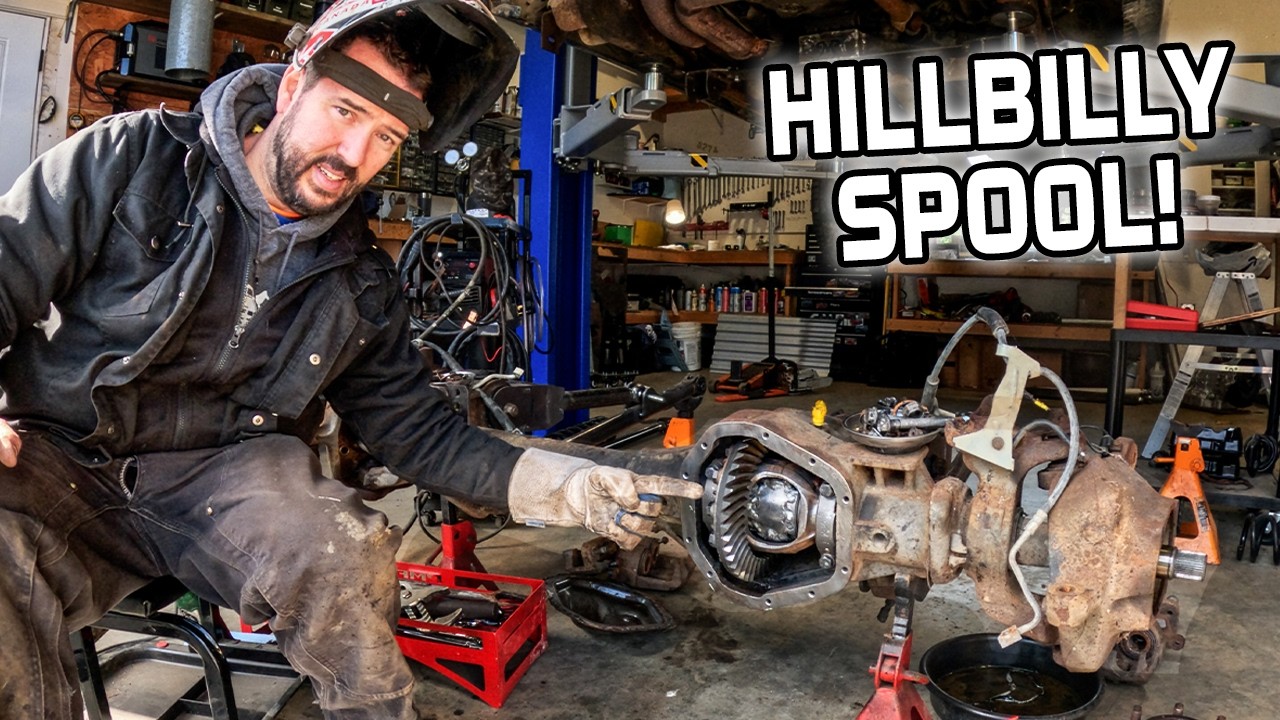
In this article and video, I’ll show you how I welded the diff in my 2005–2017 Ford Super Duty Dana 60 using custom CNC plasma-cut weld plates designed to fit between the factory spider gears.
This axle is going underneath my Chevy solid axle swap project, so this build is part of the larger SAS series currently happening on the channel. Please note this is a permanent upgrade, you will be welding the gears to the carrier. You will still be able to swap ring gear and pinion gears, as well as pull axle shafts but the carrier and gears are about to become one when you Lincoln lock your diff!
Watch the Full Video
Quick Answer
- A welded Dana 60 differential permanently locks both axle shafts together.
- This is commonly called a welded diff or Lincoln locker.
- It is an inexpensive alternative to a locker or spool for a dedicated off-road axle.
- This article covers welding the spider gears in a 2005–2017 Ford Super Duty Dana 60.
- I used custom CNC-cut weld plates to reinforce the spider gears and carrier.
What Is a Welded Diff or Lincoln Locker?
A welded differential is often compared to a spool because both force both axle shafts to turn together. The difference is that a spool replaces the differential internals entirely, while a welded differential permanently locks the factory spider gears together.
A factory open differential allows the left and right tires to spin at different speeds while turning. That’s great on the street, but terrible off-road. As soon as one tire loses traction, all the power gets sent to the tire with the least resistance.
A welded differential (sometimes called a “Lincoln locker”) permanently locks both axle shafts together so both tires always spin at the same speed.
The result:
- Better traction off-road
- More predictable climbing performance
- Cheap alternative to a spool or locker
The downside is increased tire scrub and poor street manners, which is why this setup is intended for off-road use only.
Opening Up the Super Duty Dana 60
The axle used for this build came from a front yard and had clearly been sitting for a long time. Once the diff cover came off, it became obvious there had been water sitting inside the housing at some point.
A 15mm socket will work for the diff cover bolts. Make sure to put a drain pan underneath the cover to catch the fluid when you pop the cover off. There is a drain plug, but the square drive is often damaged or rounded off, making it easier to simply remove the cover.
In my case the ring gear had surface rust and the fluid smelled absolutely terrible, but thankfully most of the damage cleaned up surprisingly well with brake clean and a wire brush.
While inspecting the ring gear, I also confirmed the factory gear ratio as 3.73 by checking the stamped tooth count directly on the ring gear. The numbers 41.11 were stamped on the ring gear, which means 41 teeth on the ring gear and 11 teeth on the pinion. If you divide 41/11=3.727. All ring gears will have the ratio stamped directly on them.
You do not need to remove the axle shafts for this project, in fact I recommend leaving them installed so there is no chance of slag getting into the inner splines. Leaving the shafts in also guarantees that your weld plate is not in the way of the shafts when sliding them back in if removed.
Although this article focuses on the 2005–2017 Ford Super Duty Dana 60, the general process of welding a differential is similar on most Dana 60 axles, including older kingpin housings.
If you’re converting your Super Duty Dana 60 to 8×6.5 wheel bolt pattern like I did for this Chevy SAS build, check out my matching unit bearing drill template here:
How to Re-Drill Ford Super Duty Dana 60 Unit Bearings to 8×6.5
Why Use Weld Plates When Welding Dana 60 Spider Gears?
A lot of people simply weld directly around the spider gears, and while that can work, I wanted something stronger than just relying on the weld so I designed some steel plates.
These custom weld plates are cut from 1/4″ steel and fit tightly between the spider gears and side gears inside the carrier. Unlike simply filling the spider gears with weld, the plates add real steel reinforcement inside the carrier before any welding begins
This does a few things:
- Adds additional steel support inside the carrier
- Reduces reliance on weld material alone
- Helps spread load more evenly across the assembly
- Makes the final weld-lock stronger overall

How to Weld the Spider Gears in a Super Duty Dana 60
Once the carrier was cleaned thoroughly with brake clean, the weld plates were installed between the gears and tack welded into place. I tacked one plate in, turned the pinion, and tacked the second side in.

From there, I slowly welded around the plates in stages to avoid concentrating too much heat in one spot.
I also welded the spider gears and side gears to the carrier. Without welding the back side of those gears you are just relying on the pins to hold together so you don’t want to forget this crucial step.

Tools and Supplies Used
Tools I used and recommend:
Dana 60 Weld Plates
If you want to build your own welded Dana 60 differential without spending huge money on a locker or spool, I now offer these CNC plasma-cut weld plates on my website.
Designed specifically for 2005–2017 Ford Super Duty Dana 60 front axles:
Shop Ford Super Duty Dana 60 Weld Plates Here
More Super Duty SAS Build Content
This Ford Super Duty Dana 60 is part of my ongoing Chevy solid axle swap build series.
You can follow the entire project here:
Final Thoughts
Would I do this on a high-end buggy or dedicated competition rig? Probably not. A real locker or spool is unquestionably stronger and more refined.
But for a budget off-road build, trail rig, or solid axle swap project, a welded differential is still one of the cheapest ways to dramatically improve traction.
And with a set of properly fitting weld plates, the process becomes cleaner, stronger, and easier to repeat.
Thanks for checking out the build and stay tuned for more Super Duty Dana 60 and Chevy SAS content soon.
If you’re building a Super Duty Dana 60 for a budget SAS, rock crawler, or trail rig, these weld plates make one of the cheapest traction upgrades you can do.